
Art guide · 2 min read
How to Choose the Right Art Size for Your Space
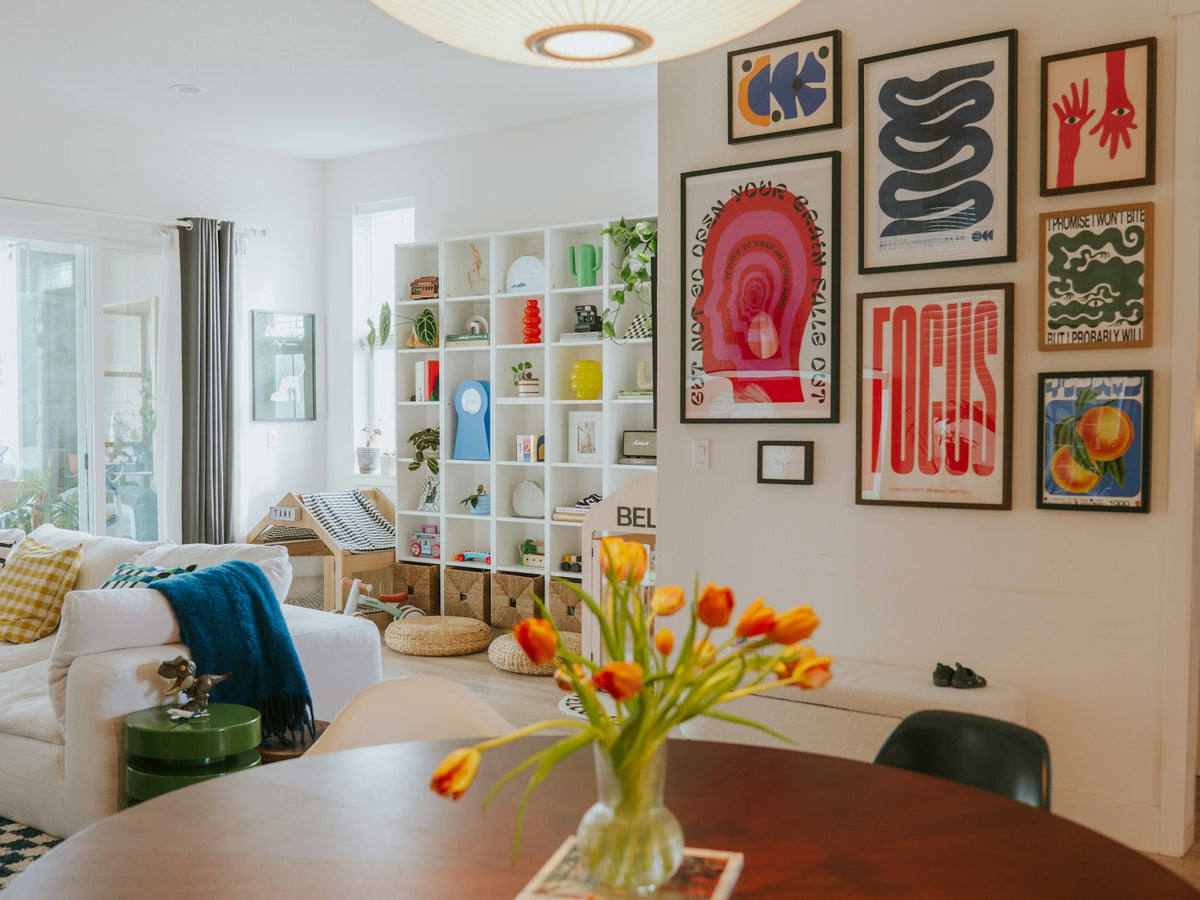
Measure the wall and the furniture
Start with the space the art needs to relate to. Measure the width of the sofa, bed or sideboard below it, then note the clear wall area around that furniture. This gives you a useful boundary before you become attached to a particular painting.
As a starting point, a single artwork or grouped arrangement often looks balanced at roughly two-thirds to three-quarters of the furniture's width. It is a guide, not a rule, but it prevents a common mistake: choosing something that feels substantial online and surprisingly small once it is on the wall.
When in doubt, test the larger option
If two sizes could work, the larger one will usually create a clearer focal point. Smaller art can be beautiful, but it needs intention—more surrounding space, a narrower wall, or company from other pieces.
- Above a sofa: centre the work on the sofa rather than on the wall.
- Above a bed: use the headboard as your visual anchor.
- Above a sideboard: leave enough room for lamps, vessels or objects without crowding the frame.
- In a hallway: consider a smaller portrait-format work that can be viewed comfortably at close range.
Hang it in relation to the room
For an open wall, position the centre of the artwork around 145–150 cm from the floor. Above furniture, a gap of approximately 15–25 cm usually keeps the two elements visually connected. Very high ceilings do not require art to be hung higher; the work should still relate to the people and furniture below it.
Make a paper version first
Use painter's tape or a sheet of paper to mark the artwork's outer dimensions, including the frame. Leave it on the wall for a day and view it from the doorway and your usual seat. This simple test is more reliable than judging scale from a phone screen.
Always confirm the finished dimensions on the product page, as orientation and frame width affect how much wall space a piece occupies.
Cover photograph by Kailun Zhang on Unsplash.